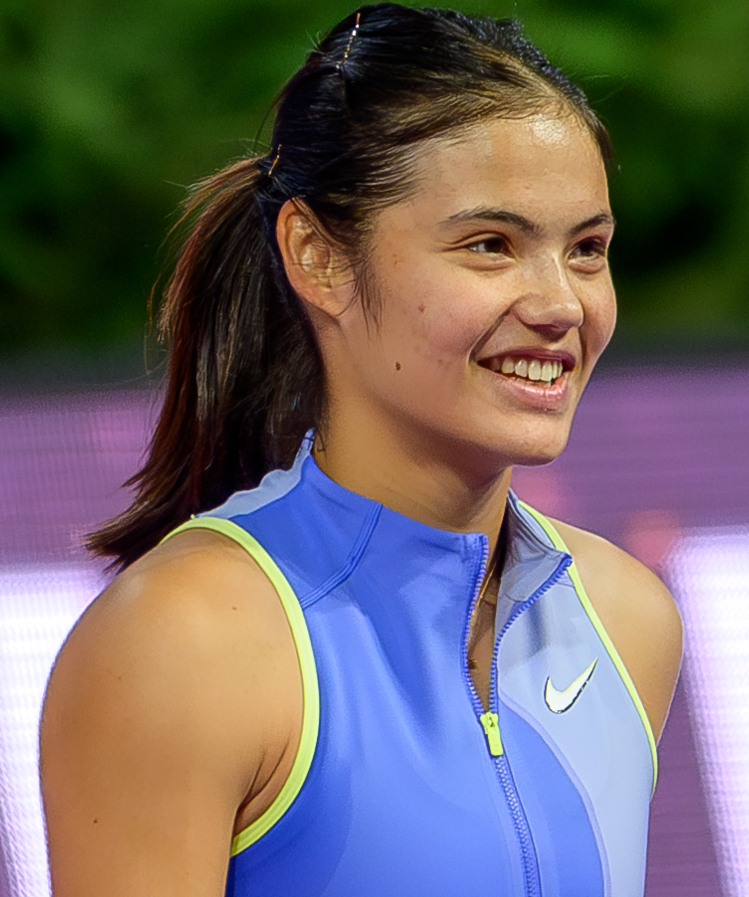
Raducanu's Game: The Pressure of Reproducing Her US Open Style
The world of professional tennis is a relentless arena, where moments of dazzling triumph are often followed by the intense pressure of expectation. Few players encapsulate this dynamic more acutely than Emma Raducanu. Her astonishing, fairytale run at the 2021 US Open, where she emerged as an 18-year-old qualifier to lift the trophy, remains one of the sport's most memorable achievements. Yet, almost three years on, the central narrative surrounding Raducanu isn't just about her past glory, but her ongoing search to rediscover that specific, uninhibited **raducanu playing style** that captivated millions. The challenge lies not merely in winning matches, but in reproducing the very essence of the game that propelled her to superstardom, all while navigating the added weight of being a major champion.
The Elusive Echo of US Open Glory: A Raducanu Playing Style Defined
In 2021, Emma Raducanu arrived in New York as an unknown quantity, devoid of the pressure that now accompanies her every move. Her **raducanu playing style** during that magical fortnight was characterized by an exhilarating blend of raw aggression, fearless ball-striking, and an almost innocent freedom. She attacked every ball, hitting with purpose and precision, often sending her shots "to the corners and hard." This free-hitting approach, unburdened by past losses or future expectations, allowed her to play purely on instinct, a crucial element she has openly yearned to reclaim.
Since that historic win, Raducanu has made it to the final of only one other tournament – the Transylvania Open in Cluj, Romania. Her journey has been marked by a series of coaching changes, persistent injuries, and a visible struggle to consistently find her rhythm and confidence on court. The innocent freedom of 2021 has been replaced by the inherent pressures of a world No. 24, a major winner whose matches are dissected and expectations are sky-high. As she herself reflected, "You definitely appreciate the innocence of just coming straight on and playing free, not knowing anything that comes with it." This sentiment perfectly encapsulates the fundamental shift she's experienced – the very glory that defined her has made it exponentially harder to reproduce that defining **raducanu playing style**.
Deconstructing the "Old" Raducanu Playing Style: Aggression and Instinct
What exactly constituted that winning **raducanu playing style** at the US Open? It was more than just hitting hard; it was a comprehensive strategic approach built on aggression and unwavering belief.
- Unleashed Aggression: Raducanu consistently took the ball early, denying opponents time and dictating rallies from the first strike. This wasn't merely power for power's sake but calculated, forward-moving tennis designed to penetrate the court and finish points quickly.
- Free-Hitting Mentality: Crucially, there was an absence of hesitation. She swung through her shots without overthinking, trusting her technique and judgment. This "playing free" allowed her to access her best tennis, unencumbered by fear of error.
- Pinpoint Precision: Beyond power, her ability to target the corners with depth and pace put immense pressure on her adversaries. This combination of aggression and accuracy made her extremely difficult to break down.
- Instinctive Decision-Making: Perhaps the most vital component was her reliance on instinct. Her decisions in high-pressure moments seemed effortless, driven by an innate feel for the game rather than complex strategic overlays.
This reliance on instinct played a significant role in her split with former coach Francisco Roig after the Australian Open. Raducanu reportedly felt frustrated by elements of her game in Melbourne, particularly an elongated forehand swing she didn't fully understand or feel comfortable with. She expressed a clear desire to return to her teenage playing style – the one that was instinctual and aggressive. The challenge for Raducanu now is how to reintegrate these elements into her game while being a more experienced, albeit scrutinized, player. She's no longer an unknown quantity; opponents have analyzed her game, and the physical demands of the WTA Tour require a robust, consistent approach. You can read more about her focused intent on aggression here:
Emma Raducanu's Playing Style Reboot: US Open Aggression.
The Coaching Conundrum and the Quest for Authenticity
Raducanu's post-US Open journey has also been notable for her frequent coaching changes. While common in tennis, her situation highlights a fundamental desire: to find a coaching relationship that nurtures her natural **raducanu playing style** rather than attempts to fundamentally alter it. Following her split with Roig, she openly stated her intention to "tap into a few people" for advice, even bringing back former coach Mark Petchey informally at Indian Wells. Her stance is clear: she remains open to a full-time coach, "as long as they do not dictate the way she should play."
This stance speaks volumes about her quest for authenticity on court. She seeks guidance that helps "bring my instincts back out," rather than imposing a foreign game plan. This delicate balance – accepting expert advice while staying true to one's core identity – is a critical aspect of player development, especially for a talent like Raducanu whose breakthrough came from an unscripted, natural flair. For any aspiring player, finding a coaching philosophy that aligns with your innate strengths and allows you to play your most authentic game is paramount. It's about refinement, not reinvention. Raducanu's situation underscores that a coach's role should often be to enhance and empower, not to overwrite. Discover more about her pursuit of free-hitting tennis here:
Raducanu's Style Search: Why She Demands Free-Hitting Tennis.
Navigating the WTA Tour: Evolution vs. Replication
The biggest hurdle for Raducanu isn't just reproducing her US Open level, but understanding that the landscape of the WTA Tour constantly evolves. While she aims to return to her previous **raducanu playing style**, the question is whether true success lies in replication or in a refined evolution of that style. The 18-year-old Raducanu had an element of surprise; the 23-year-old Raducanu is a known commodity. Her opponents now have footage, scouting reports, and strategies specifically designed to counter her strengths.
Moreover, the physical toll of professional tennis cannot be overstated. A series of long-term and persistent injuries has undoubtedly disrupted her ability to build consistent momentum and rhythm. Recovering physically and mentally from these setbacks is a journey in itself, often forcing players to adapt their game or approach. Raducanu understands this, acknowledging that "it’s going to take a while because it’s been so many years of not necessarily doing that" – referring to playing in her preferred, aggressive manner.
The path forward likely involves an integration of her core strengths from 2021 with the experience and tactical understanding gained since. It’s about being aggressive, but perhaps more selectively; free-hitting, but with an added layer of strategic depth. It's not about being the same player she was five years ago, but becoming a stronger, more complete version of herself, built on the foundations of that unforgettable success.
Conclusion
Emma Raducanu's journey to recapture her US Open **raducanu playing style** is a compelling narrative of athletic self-discovery under immense scrutiny. Her "total reboot" at Indian Wells with a new sponsor, Uniqlo, and the informal guidance of Mark Petchey, signals a determined effort to reconnect with her authentic self on court. The pressure of reproducing a game style forged in innocence is undeniable, but it's also an opportunity. As she battles through the challenges of injuries, coaching changes, and the weight of expectation, Raducanu's quest is not just about returning to past glory, but about forging a sustainable, confident, and perhaps even more formidable **raducanu playing style** for the future. Her ongoing search reminds us that the path to success in elite sports is rarely linear, often demanding evolution, resilience, and an unwavering commitment to one's true identity.